Showing posts with label Rod Stewart. Show all posts

Monday, December 1, 2025

You wear it well (Rod Stewart) (LP 3987 - 3995)

Rod Stewart  An Old Raincoat Will Never Let You Down (a.k.a. The Rod Stewart Album) (Vinyl, Mercury Records, 1969) *** 

Rod Stewart  Gasoline Alley (Vinyl, Mercury Records, 1970) ***** 

Rod Stewart  Every Picture Tells a Story (Vinyl and CD, Mercury Records, 1971) ***** 

Rod Stewart  Never a Dull Moment (Vinyl, Mercury Records, 1972) ***** 

Rod Stewart  Atlantic Crossing (Vinyl, Warner Bros. Records, 1975) *** 

Rod Stewart  A Night on the Town (Vinyl, Warner Bros. Records, 1976) ***

Rod Stewart  Blondes Have More Fun (Vinyl, Warner Bros. Records, 1978) ****  

Rod Stewart  Absolutely Live (CD, Warner Bros. Records, 1982) ***

Rod Stewart  Unplugged...and Seated (CD, Warner Bros. Records, 1993) ***    

Genre: Pop, rock

Places I remember: Spellbound Wax Company, JB Hi Fi, Real Groovy Records, Blondes Have More Fun was a gift from Ness at Marbecks., Shona Walding collection.

Fab, and all the other pimply hyperboles: Maggie May (Every Picture)

Gear costume: Mandolin Wind (Every Picture), Blondes Have More Fun 

They loom large in his legend 
(The Album Collection playlists): Part 1Part 2Part 3Part 4Part 5Part 6

Active compensatory factors: Rockin' Rod has already appeared in my catalogue countdown via his links to the Faces albums. 

Right from the start, he has always maintained a solo career as well as appearing for Faces and in other contexts. Often the same musicians appear and the music is often very similar.

His first proper solo album was named The Rod Stewart Album in America and An Old Raincoat Will Never Let You Down in the UK. Just as Rod has moved between solo and Faces assignments, so has Ronnie Wood. He appears here as well as Ian McLagan. Keith Emerson and Micky Waller are also on it. 

Rod's singing successfully marries folk, blues and rock on this debut. He also emerges as a highly effective songwriter. He's a talented lad! Key songs are his version of Handbags and Gladrags, his own Cindy's Lament, and Man of Constant Sorrow.

Gasoline Alley
started a run of albums that included all Faces members and a golden run of success in commercial and artistic terms. 

The title song by Rod and Ronnie sounds like an instant standard. The rest of the album contains a mixture of covers and some originals - also something that would become a hallmark of Rod Stewart albums to come. Rod can do it all!

The high water marks would be this album, Every Picture Tells a Story and Never a Dull Moment.

Every Picture Tells a Story
was the first taste of Rod that many of us got via Maggie May's success. He's a lovable rogue and Every Picture is a lovable album. 

Here's why: it's folk rock innit; there's brilliant use of the mandolin (by Lindisfarne's Ray Jackson); the whole thing is fresh, immediate and suitably unpolished - almost sloppy (That's All Right); Rod's singing is at its peak - soulful on Seems Like A Long Time, raucous on the title track, introspective on Mandolin Wind, folky on his peerless version of Reason To Believe, eerily sensitive on Dylan's Tomorrow Is A Long Time, Faces' style rock on (I Know) I'm Losing You; his writing definitely peaked - Mandolin Wind (his best ever song), and co-writes on Every Picture and Maggie May.

Ah, Maggie May.

That's the one that did it for me in 1971.

The single was huge obviously, for him and for us. At the time I wasn't aware of Steampacket, Jeff Beck or Faces (Small Faces yes, but I didn't realise the connection to Faces in 1971). Nor did I know he'd already had two solo albums released. 


Maggie May came out of nowhere!! And it hit with a wallop and a half. Debauchery! Randy scouse git fersure! Right there on our radios. Oooo er. My sympathies were with him from then on. 

Never a Dull Moment
continued the momentum superbly. Turned out it was his last album to amalgamate the folk and rock strands - a great example is You Wear It Well. The covers are excellent again - Hendrix's Angel becomes Rod's own.

Atlantic Crossing is next (I haven't bothered with Smiler) and the change is obvious from the cover. The Britt Ekland era was upon him (1975 to 77) and the glammed up slick jet set Rod was on full display. The music is divided into a fast and a slow side (which doesn't really work for me) - that would persist for the next few albums. In this case the slow side is the better one, crowned by a sublime version of Sailing.

Gone were Faces members, replaced by American session musicians for the foreseeable future. I get that he couldn't keep doing the same old same old but he lost some feel along the way. 

A Night on the Town continued the mainstream success with The Killing of Georgie Parts 1 and 2 being a standout on the slow side. I lost track of him with Foot Loose and Fancy Free (too slick, too glib for my tastes - I prefer it when he means it).

Blondes Have More Fun
was a gift from a co-worker at Marbecks and I loved it. It's fun to listen to still, even though he has a go at disco - Do Ya Think I'm Sexy is terrific. The looseness on tracks like Attractive Female Wanted and Ain't Love a Bitch is welcome, and the title track rocks like crazy!

That's it for studio albums. I stopped before the rot set in in the eighties. Live is where Rod can come fully alive. I have two live albums and they present different looks. Unfortunately, they don't really capture the brilliance of his live show like his work with Faces does.

Absolutely Live is first. It got a bad press at the time, but I like it - mainly because it reminds me of a time working at Marbecks and playing this in the shop. It's not brilliant but it has its moments.

Unplugged...and Seated was part of the MTV series where rockers returned to their back catalogue in a relaxed acoustic setting. Rod reunites with old mucker Ron Wood for his set. It's a pleasant journey with their easy rapport together part of the appeal. 

Where do they all belong? I'm fairly comfortable with my Rod Stewart albums. I do also have five or six compilations that have accumulated over the years.

Thursday, November 20, 2025

Can I get a witness (Steampacket) (LP 3948)

Steampacket  Rod Stewart & Steampacket (Vinyl, Pagan Records, 1993) ****  

GenreSoul revue, jazz, R&B, blues

Places I remember: Real Groovy Records

Fab, and all the other pimply hyperboles: Can I Get A Witness

Gear costume: Back at the Chicken Shack 

They loom large in his legend (The Album Collection playlists): Part 1Part 2Part 3Part 4Part 5Part 6

Active compensatory factors: A cheeky bit of packaging promotes this album as Rod Stewart & Steampacket. He's the biggest name that eventually emerged from this sixties' blues band, but it could just as easily have been marketed as Julie Driscoll & Steampacket, or Brian Auger & Steampacket, or Long John Baldry & Steampacket (he has the best claim as he started the band). 

All four were members, along with guitarist Vic Briggs, Richard Brown on bass guitar and Micky Waller on drums.

They never recorded a studio album, nor did they release a live album at the time. So where did these songs come from? The answer is - from some demo tapes they recorded at a rehearsal in the Marquee Club. They've been released in a myriad of titles ever since.

It's soul-jazz-rock music featuring Brian's cool organ sounds. The three vocalists are on form when featured, even though it's a demo, but it's Brian Auger that's the appeal for me. Everything he does has value.
 
Where do they all belong? What happened next is probably more interesting to fans of each member. Rod Stewart left in early 1966 and joined Shotgun Express. Long John Baldry left a few months later, and Steampacket disbanded soon after. Long John Baldry then joined Bluesology (which included a then unknown Elton John). Julie Driscoll, Brian Auger and Vic Briggs formed Trinity.

Tuesday, April 23, 2024

Had me a real good time (Faces) (LP 2489 -2495)

Faces  First Step (CD, Warner Bros Records, 1970) *** 

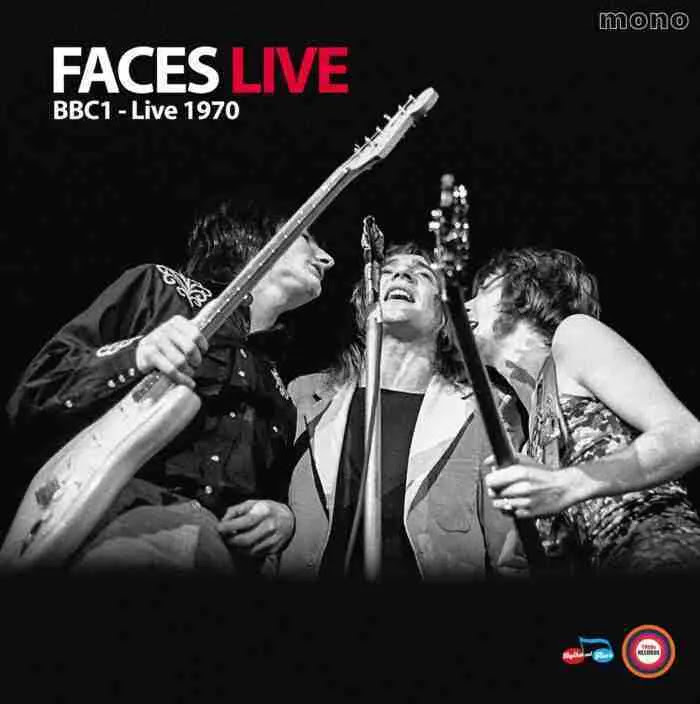
Faces  Faces Live BBC1 - Live 1970 (Vinyl, 1960's Records ) ***  

Faces  Long Player (CD, Warner Bros Records, 1971) *** 

Faces  A Nod Is As Good As A Wink... To A Blind Horse (CD, Warner Bros Records, 1971) ***** 

Faces  Ooh La La (CD, Warner Bros Records, 1973) *** 

Rod Stewart/ Faces  Coast To Coast: Overtures and Beginners (Vinyl, Mercury Records, 1974) *** 

Rod Stewart & Faces  Live in London (CD, Immortal Records, 2007) *** 

GenreRock 

Places I remember: Fives, JB Hi Fi; Record Shop in Notting Hill (Coast To Coast)

Fab, and all the other pimply hyperboles: Miss Judy's Farm (A Nod...)

Gear costume: Stay With Me (A Nod...)

Active compensatory factors
: What I love about Faces is they always seem to be having the best time! There is an unassuming spirit of fun that shines through, most of the time.

That said, First Step is a tad tentative. Although the template is pretty much there - Ron's casually brilliant guitar riffs, a slightly shambolic approach (drums are key to that, and Ron's guitar); Mac's organ and piano sound; an instrumental thrown in like they ran out of time to write lyrics; Rod's ad libs and casually brilliant vocals; Ronnie Lane's vocal alternative; the football terrace backing vocals.

They'd get better, or more shambolic, as they'd go on. At this stage though it's a rough diamond. The Live 1970 album is a collection of Top Gear and John Peel sessions. It's all good fun, as you'd expect but it's not a continuous live concert.

Long Player is the second studio album. I often think of those first two studio albums as Vol 1 and 2. They are first steps towards the glory that is album number three - their classic.

A Nod Is As Good.
..is where all the elements come together brilliantly. The album is their second of 1971 (possibly the best year ever for music) but this one sounds way more confident than Long Player.

It kicks off with the mighty Miss Judy's Farm and doesn't let up. Along the way we see all sides of Faces. From Debris to Stay With Me. If you only buy one studio album from Faces - this is it!

Things had changed a bit by 1973. Rod's solo career was off and running (Maggie May had happened) and the cracks were appearing. The back cover has five individual portraits, rather than a group shot.

Still, there are plenty of quality spots - principally Cindy Incidentally and the title track sung brilliantly by Plonk. In fact, he influences the sound a lot on this album and you can hear the beginnings of his own solo career, particularly on side 2.

The Rod Stewart/ Faces live album, Coast To Coast: Overtures and Beginners (what a daft title!) is a tricky one. Rod didn't tour on his own, instead he used Faces as his live band. So, this set has 3 Faces songs, and 6 solo Rod Stewart songs.

In that regard the band sound had begun to sound much more like his solo albums, rather than A Nod Is A Wink... era Faces.

By this stage Tetsu had replaced Ronnie Lane in the band and the stage was getting set for a break up.

The Live In London set is raucous and good fun but it's more like a Rod Stewart concert with backing from the last orders version of Faces. Keith Richards makes an appearance, which is fitting, given the Faces were so obviously inspired by the Stones.

Where do they all belong? A compilation is probably the most obvious place to start, but it doesn't give the full picture to my mind. Instead, I'd recommend A Nod Is A Wink.. as the starting point. Faces at their finest.

Friday, January 29, 2021

Play with me (Jeff Beck) (LP 550 - 554)

Jeff Beck Group Rough and Ready (CD, Sony Music, 1971) ****

Jeff Beck Group Jeff Beck Group (CD, Sony Music, 1972) *** 

Jeff Beck Blow By Blow (CD, Sony Music, 1975) ***

Jeff Beck Wired (CD, Sony Music, 1976) ****

Jeff Beck with The Jan Hammer Group Live (CD, Sony Music, 1977) ****

GenreBritish pop/ rock 

Places I remember: HMV East Croyden

Fab, and all the other pimply hyperboles: Situation (Rough and Ready); Blue Wind (Wired) 

Gear costume: Going Down (JBG); Freeway Jam (Blow By Blow)

Active compensatory factors: Having just read Rod Stewart's autobiography I have a different take on Jeff's peculiar personality. Is it the truth? Who knows, it's certainly Rod's version of the truth 
(see what I did there?). 

He's definitely a restless musician - never sticking with a bunch of musicians for very long. Woody and Roddy only lasted  for two albums (Truth and Beck-ola) and were gone for 1971's Rough and Ready. Then that band (including Max Middleton and Cozy Powell) only lasted for two albums, and so on.

This five album package in  the Original Album Classics series by Sony Music) certainly shows Jeff's ruthless methodology from 1971 to 1977.

That's not to mean the music suffers though. His guitar heroics are on display in a variety of settings over these five albums, and it's actually the period of his that I like the most. 

The second incarnation of Jeff Beck Group makes a much funkier, jazzier sound than the blues/ hard rock of the Rod Stewart version.

First 'solo' album, Blow By Blow, is an instrumental album (pesky lead singers are dispensed with from here onwards) and allows Beck to experiment with jazzier guitar styles. It's a transitional album from the rock of the Jeff Beck Group towards the full on jazz fusion sound of Wired and Live.

Max Middleton and Jan Hammer deserve special mentions - both hold their own on keyboards and are not overshadowed by Beck's guitar pyrotechnics. Instead they shine and create their own distinctive sounds to complement Beck.  

Beatle fans note: Blow By Blow and Wired are both superbly produced by George Martin.  

Where do they all belong? Truth and Beck-ola have their moments but haven't aged as well - I've gone for a cheapo best of (featuring Rod Stewart) compilation. It cherry picks the best moments from Rod and Ron's time with Jeff (and includes, of course, Hi Ho Silver Lining).